Sagging ceiling repairs in Sydney, gyprock and fibrous plaster
If your ceiling has started to drop, the first useful thing anybody can tell you is which kind of ceiling it is, because there are two and they fail for completely different reasons. A Sydney home built before about 1970 most likely has a fibrous plaster ceiling, held to the joists by plaster and hessian wads rather than by screws, and considerably heavier than modern board. Anything newer is plasterboard, held on fasteners and adhesive. The diagnosis, the risk and the repair are unrelated between the two, and neither can be assessed properly from the floor. Before any of that: if a ceiling is visibly bellied, cracked around the edges or has water in it, keep people out of the room and get it looked at rather than waiting to see what it does.
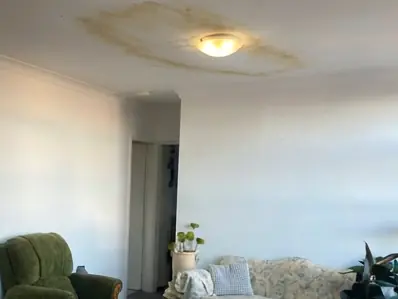
Fibrous plaster ceilings in pre 1970 homes
The Federation, inter war and early post war ceilings across Sydney's older suburbs. These are assessed from above, and the condition of the wads decides everything that follows. Depending on what we find, the options run from installing new fixings from above through to replacing the ceiling entirely, and the difference in cost between them is large enough that it is worth finding out properly.
- Roof space inspection of the wads before any price is given
- New fixings from above where the ceiling is sound enough to save
- Full replacement where it is not, in board suited to the joist spacing found
- Original cornice protected during the work
- Older joists are seasoned hardwood, which takes a different screw from pine
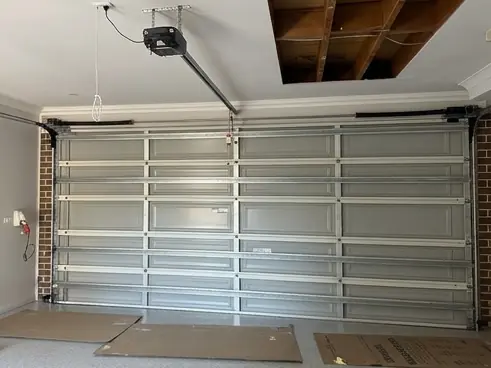
Plasterboard ceiling re-fix and replacement
Newer ceilings sag for reasons that can usually be diagnosed and corrected: fixings that have let go, board that was under specified for the joist spacing, adhesive doing work it was never meant to do on its own, or a load that was added later. The repair is straightforward once the reason is known, and guessing at it is what turns a one visit job into two.
- Board and joist spacing checked against the manufacturer's maximums
- Ceiling propped back into plane before anything is fixed
- Affected sheets replaced rather than re-screwed where the board is damaged
- Butt joints back-blocked so the repair does not telegraph through
- Fasteners kept clear of adhesive daubs, which is where pops start
Why ceilings sag, and what actually stops it happening again
A sagging ceiling is a symptom. Repairing the ceiling without finding what pulled it down means paying for the same job twice, usually within a couple of years. These are the causes we find most often in Sydney, and in four of the six the cause is still active on the day we arrive.
Water from a roof leak or a burst pipe above
The dominant cause, and Sydney gets it in bursts rather than steadily. Water soaks into the plaster and into the wads holding it up, and a wet ceiling weighs a great deal more than a dry one. The leak has to be fixed first, by a roofer or a plumber, and the ceiling has to dry before anything is repaired. We will tell you when a ceiling needs to come down rather than be re-fixed, because water damaged plaster does not recover.
Somebody standing on it from the roof space
Air conditioning installers, solar installers, antenna technicians and insulation crews all work in roof spaces, and standing on the plaster straps rather than the joists is a documented way to break the fixings on a fibrous plaster ceiling. The damage is done from above and shows up from below weeks or months later. If you have had anyone in your roof space recently and the ceiling has moved since, that is worth mentioning when you call.
Insulation added after the ceiling went up
Ceiling framing spans are published on the basis of an insulation load of no more than 5 kilograms per square metre. Retrofitted batts or loose fill that exceed that put the ceiling outside the specification it was built to, and it sags slowly rather than suddenly, which is why nobody connects the two. Worth knowing before you insulate as much as after.
The wrong board on joists that are too far apart
On a plasterboard ceiling, 10mm Gyprock Plus is limited to joists at 450mm centres. A great many ceilings are on 600mm centres, which needs 10mm Supaceil or 13mm board instead. Where the wrong board went up, the ceiling was outside specification from the day it was built and more screws will not fix it. The answer is the right board or more framing, and it is worth knowing which you are dealing with before paying for a re-fix.
Somebody screwed it back up from below without propping it
This is the advice all over the internet and it is the wrong way round. Screws driven into a ceiling that has not been propped back into place pull their heads straight through the plaster, so you end up with a sagging ceiling and a row of holes in it. On fibrous plaster, which is heavier and more brittle, it is worse. The board has to be supported back to the joist before anything is fixed.
Cosmetically patched while the cause was left alone
A sag can be filled, sanded and painted, and it will look completely fine for a while. It is also the most expensive thing you can do, because the cause is still there and the second repair is bigger than the first. We would rather tell you the ceiling needs replacing and lose the job than take money for a patch over a problem that is still running.
Three things that decide what your ceiling actually needs
Two kinds of ceiling, two completely different diagnoses
Fibrous plaster was made in Australia from 1912 and stayed in common use until the late 1960s, which maps onto the terraces of the inner west, the Federation bungalows, the inter war North Shore and a good deal of post war brick veneer. It hangs on plaster and hessian wads that fail from water, vibration, impact, overload and age. Plasterboard hangs on fasteners and adhesive and fails for entirely different reasons. Assessing one using the logic of the other produces a confident wrong answer, and that is most of what is wrong with the advice online.
We look from the roof space, because that is where the answer is
From underneath you can see that a ceiling has dropped. From above you can see why: how many wads have cracked, how many have let go entirely, whether the joists are at the spacing the board needed, whether there is water coming in, and whether this is a re-fix or a replacement. A quote given without going into the roof space is a guess dressed up as a price, and it is the reason so many of these jobs get done twice.
If it needs propping, we will say so before we quote
Where the fixings on a fibrous plaster ceiling have been compromised, parts of it or all of it can come down without warning, and it is heavy enough to hurt somebody. If that is what we find, the honest sequence is to make it safe and keep the room out of use first and talk about the repair second. We would rather prop a ceiling and tell you the truth about it than sell you a patch over something structural.
How to work out what your sagging ceiling is doing, before anyone comes
You can get most of the way to an answer from the floor, in about ten minutes, without touching anything. It is worth doing, because the two kinds of ceiling fail for different reasons and the questions anybody competent will ask you on the phone are the ones below.
Find out roughly when the house was built
This is the single most useful thing you can establish, because it decides which kind of ceiling you are probably looking at. Fibrous plaster was made here from 1912 and stayed in common use until the late 1960s, so a house from before about 1970 most likely has one. Anything built since is almost certainly plasterboard. A rates notice, the title documents or a neighbour with an identical house will all answer it.
Look at the shape of the sag, not just the depth
Stand back a few metres and look along the ceiling rather than up at it, ideally with a light source off to one side, which makes the plane much easier to read. A dip that runs in regular bands across the room is telling you something different from one area that has dropped on its own, and a sag that follows the line of a wall above is different again. Photograph it from where you are standing, because the shape is the part that does not survive being described over the phone.
Look for staining, and work out whether it is active
Any brown or yellow discolouration means water has been through the plaster at some point. What matters is whether it still is. Mark the edge of the stain in pencil, note the date, and look again after the next decent rain: a stain that has grown has a live source above it, and one that has not may be historical. Water that is still coming in has to be stopped before any ceiling work is worth paying for.
Think about who has been in the roof space
Air conditioning, solar, antenna and insulation work all put somebody up there, and weight in the wrong place breaks fixings from above while showing nothing from below for weeks or months. If anyone has been up there in the last year, that is directly relevant and most people never think to mention it. The same goes for anything stored up there.
Check whether insulation was added after the house was built
Ceiling framing spans assume an insulation load of no more than 5 kilograms per square metre. Batts or loose fill added later can exceed that, which puts the ceiling outside the specification it was built to, and it then sags slowly enough that nobody connects the two events. If you can see into the roof space safely from a manhole, without climbing in, note what is up there and roughly how deep it is.
Do not push it back up, and do not screw it
This is the step that matters, and it runs against most of the advice online. Driving screws into a ceiling that has not been propped back into plane pulls the heads straight through, so you finish with the sag you started with and a row of holes through it. On fibrous plaster, which is heavier and more brittle than board, it can bring a section down. Pushing on it by hand does the same thing more slowly. Leave it alone.
Decide whether the room should stay in use
There is no published measurement that separates a ceiling you can live under from one you cannot, and anybody quoting you a number for it has invented it. What should move you is change: a sag that is visibly deeper than it was a month ago, fresh cracking at the edges or around the cornice, or any creaking. If the ceiling is doing any of that, keep people and furniture out from under it and treat it as urgent rather than waiting for a convenient appointment.
With those seven answers, somebody who knows what they are doing can usually tell you over the phone whether you are looking at a re-fix or a replacement, and whether it needs seeing this week. What none of it replaces is the look from above, because the roof space is where the reason is, and that is the part that decides the price.
Get a free quote
Send a photograph of the ceiling from a couple of metres back, and one close up if there is cracking or staining. Tell us roughly when the house was built and whether anyone has been in the roof space recently. That is usually enough for us to tell you which kind of ceiling you have and whether it needs looking at urgently. A ceiling that has dropped significantly is one we would rather come and see. Quotes are free, and there is no travel charge to any suburb we work in.
Brands we supply and install
Plasterboard, cornice and compounds from the major Australian manufacturers, delivered to your job and included in the price.
Service available across every Sydney region
Central and Inner Sydney
Sydney CBD, Pyrmont, Surry Hills, Marrickville, Burwood, Strathfield and Sydney Olympic Park
The Eastern Suburbs
Bondi, Double Bay and Randwick
North Shore and Northern Sydney
North Sydney, Mosman, Manly, Lane Cove, Chatswood, Ku-ring-gai, Hornsby, Macquarie Park, Ryde and Castle Hill
Western Sydney
Parramatta, Blacktown, Merrylands, Fairfield, Liverpool, Bankstown and Penrith
South West and Macarthur
Austral, Leppington, Oran Park, Camden and Campbelltown
Southern Sydney and St George
Cronulla, Miranda, Sutherland and Hurstville
Frequently asked questions
When should I be worried about a sagging ceiling?
Treat it as urgent if the sag is visible from across the room, if there is cracking following the edges of the ceiling or around the cornice, if there is any staining or damp, or if it has moved noticeably in a short time. Any of those on a pre 1970 fibrous plaster ceiling is a reason to keep people out of the room now rather than after the weekend, because that material is heavy and it can let go without warning. A hairline crack in an otherwise flat modern ceiling is a different conversation.
Can a sagging ceiling be fixed, or does it have to come down?
Both happen, and which one applies is not knowable from the floor. A fibrous plaster ceiling where most of the wads are intact can often be re-fixed from above and kept. One where they have largely failed, or where water has been through it, is a replacement. On plasterboard the same logic applies to the board itself: sound board that has simply let go can be re-fixed, but board that is damaged, wet or under specified for the joist spacing is replaced. We look in the roof space before we tell you which.
How much does it cost to fix a sagging ceiling?
It depends entirely on what the inspection finds, and any figure quoted before that is guesswork. A localised re-fix in one room and a full ceiling replacement in a Federation home are different orders of work. What we can do is look at photographs, tell you which of the two situations you are probably in, and then price it properly once we have been up there. The assessment is what makes the number real.
Will insurance cover a sagging ceiling?
It depends on the cause, and that is the distinction insurers make. Damage from a sudden event, a storm, a burst pipe, water getting in during a specific incident, is usually the kind of thing a policy contemplates. Gradual deterioration, age, and wads that have simply reached the end of their life normally are not. We are not the people to advise you on your policy, but establishing the cause is part of the job anyway, and a written description of what we found is usually what your insurer is asking for.
Can I just screw it back up myself?
This is the advice that comes up first online and it leaves out the part that matters. A ceiling has to be supported back into position before anything is fixed, otherwise the screw heads pull straight through and you have a sagging ceiling with a row of holes in it. More importantly, that advice is written for plasterboard, and on a fibrous plaster ceiling it means standing under something heavy that may already be failing and pushing on it. If your house is pre 1970, find out what your ceiling is before you touch it.
How do I tell whether my ceiling is fibrous plaster or plasterboard?
Age is the strongest clue. Built before about 1970, in the inner west, the eastern suburbs, the lower north shore or the older middle ring, it is very likely fibrous plaster. Built after, it is very likely plasterboard. The definitive answer is in the roof space, where fibrous plaster shows as sheets held by plaster and hessian wads across the joists rather than screwed to them. Send us a photograph from the roof space if you can get one safely, and we can usually tell you straight away.
The ceiling is sagging but there is no leak. Why?
Three common reasons. Insulation added after the ceiling was built, which loads the framing past what its spacing was designed for. Board that was under specified for the joist centres from the beginning, which is common where 10mm board went onto joists at 600mm. Or, on an older ceiling, wads that have simply aged, sometimes helped along by vibration from traffic, rail or nearby construction. None of these needs water to happen.
Do I need to get the roof fixed before you can do anything?
Yes, and it is not us being awkward. Repairing or replacing a ceiling under an active leak means doing the same job again after the next decent rain. The roof or the plumbing has to be sorted by the relevant trade and the ceiling space has to dry out first. We will tell you what we can see about where the water is coming in, but the fix belongs to somebody else and it belongs first.
Could there be asbestos in an old ceiling?
It is a real question on any home from before the 1990s, and textured ceiling coatings are the usual concern. It cannot be identified by looking at it. Where there is any doubt we stop and it gets tested before anything is disturbed, and if it comes back positive the removal is a licensed job that we do not do. We can point you to who does.
Ready to get started?
Get a fast, free quote, or call now and speak to someone who can help.