Gyprock and plasterboard wall repairs in Sydney
Most wall damage in a house is one of a handful of things: a door handle through the wall where nobody fitted a doorstop, furniture caught during a move, a bracket or a screen removed and the holes left behind, or cracking that has appeared without anybody touching anything. Some of it is genuinely a job for a repair kit and a Sunday afternoon, and we will say so. The rest divides into repairs that need something solid behind them, and cracking that is the house talking rather than the plaster failing. Knowing which one you have got is most of the value here, because a patch over a moving crack comes back and a patch over nothing at all comes back faster.
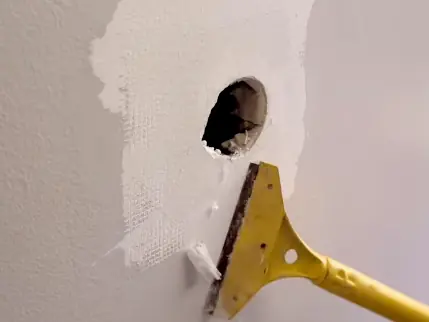
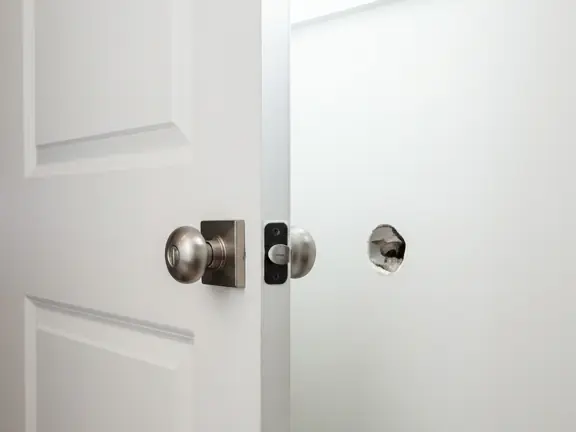
Holes, impact damage and making good after fixtures
The everyday half of this work. Door handles through walls, furniture damage from a move, holes left after a television bracket, security screen, handrail or air conditioner comes off, and rectification after an electrician or a plumber has been through a wall. Most of it is a single visit.
- Damaged board cut back and replaced rather than filled where the sheet is compromised
- Back-blocking behind anything larger than a fastener hole
- Making good after other trades, including where the wrong wall got opened
- End of lease and pre sale make good, where the finish has to survive an inspection
- Where a bracket is going back on, a proper backing installed while the wall is open
Cracking, screw pops and movement
The half where the plaster is the symptom. Cracking at wall and ceiling junctions, diagonal cracks from openings, fasteners appearing through the paint, and cornice separating from the wall. The repair is straightforward; working out whether it will stay repaired is the part worth paying for.
- Fastener pops re-fixed rather than refilled, and kept clear of adhesive daubs
- Movement cracking assessed for what it is doing rather than just filled
- Control joints formed where a crack is going to keep reopening
- Wall and ceiling junctions detailed rather than jointed rigid
- Honest advice where the cause is structural and belongs to another trade
Why wall repairs come back, and what stops them
A wall repair that fails does not usually fail because somebody was careless with the filler. It fails because there was nothing behind it, because the cause is still moving, or because it was judged in the wrong light. All three are avoidable and none of them is obvious on the day the patch goes on.
Filler with nothing behind it
Cut a hole between two studs and there is nothing back there for a patch to bear on, so filler alone bridges a void and cracks out the first time the wall is knocked or the house moves. The fix is to bed a strip of plasterboard behind the opening first, which is the same back-blocking the manufacturer requires behind off framing butt joints for a proper finish. It takes an extra step and it is the difference between a repair and a temporary result.
The wall turns out to be fire rated
A garage wall, a wall on a boundary, a duplex party wall or an apartment corridor is very often a tested fire rated system, and there is a specific published repair method for those. Patching one the ordinary way is a compliance failure that stays invisible until an inspection or an insurance question. So the first thing we do on any repair is work out what kind of wall we are looking at, which is not a question most people think to ask.
Screw pops that keep coming back
Fasteners pushing through the surface are the frame talking, not the plaster. They come from timber drying and moving, and the manufacturer's own control is keeping permanent fasteners at least 200mm clear of the edge of an adhesive daub, because that is where they concentrate. Re-filling them without re-fixing the sheet properly means doing it again next summer. On a house in its first year it is also worth knowing this can be a warranty conversation rather than a maintenance one.
Diagonal cracking from window and door corners
This is the reactive clay under much of Western Sydney doing its seasonal thing, and on the shale country the ground movement is measured in tens of millimetres between wet and dry. The pattern is diagonal from an opening corner, often with the cornice separating from the wall at the same time. Filling it is cosmetic and it will reopen. The honest conversation is about what the crack is doing over time and whether it needs a control joint rather than compound.
A cracked wall in a bathroom or laundry
The manufacturer's wording on this is unusually direct: cracks or damage in a tiled area that would let water into the wall cavity have to be repaired immediately. Behind those tiles is board, framing and insulation, and none of it improves while it is wet. A hairline crack in a shower wall is not a cosmetic item to get to eventually, and it is worth treating differently from the same crack in a hallway.
A patch that disappears under a work light and shows under a window
A repair looks perfect under a lamp held square to the wall and can be obvious at eight in the morning when the sun rakes across it. Where the paint is gloss, semi gloss, mid tone or dark, or where a window or a downlight washes the wall, the manufacturer's own selection chart puts that surface in the highest finish category. We look at a patch the way you will look at it, in the light the room actually has, before calling it finished.
Three things we check before touching a wall
What kind of wall is it
Ordinary internal lining, a wet area sheet behind tiles, or a fire rated system. Each has a different correct repair and only one of them is the quick version. A garage wall in a house built in the last few decades is very often rated, and a duplex or apartment wall almost certainly is. It takes a minute to establish and it decides everything that follows.
Is there something behind the patch, or are we filling air
Anything bigger than a screw hole needs to bear on something. We bed a plasterboard strip behind the opening so the repair has a substrate, rather than relying on filler to span a gap between studs. This is the single most common reason a repair someone else did has already cracked, and it is the difference between fixing it once and fixing it annually.
What light is going to fall on it
The finish a repair needs is set by how the wall is lit and what it is painted with, not by how big the hole was. A dark or gloss wall, or one raked by a window or a downlight, needs the patch feathered much further out than a flat white wall in a hallway. We ask what the room is like before we start rather than discovering it when you do.
Get a free quote
A photograph is usually enough to price a wall repair, and two are better: one from across the room and one close up. Tell us roughly how big the damage is and what the wall is, particularly if it is a garage, a bathroom or a wall you share with a neighbour, because those three change the answer. Quotes are free, and there is no travel charge to any suburb we work in.
Brands we supply and install
Plasterboard, cornice and compounds from the major Australian manufacturers, delivered to your job and included in the price.
Service available across every Sydney region
Central and Inner Sydney
Sydney CBD, Pyrmont, Surry Hills, Marrickville, Burwood, Strathfield and Sydney Olympic Park
The Eastern Suburbs
Bondi, Double Bay and Randwick
North Shore and Northern Sydney
North Sydney, Mosman, Manly, Lane Cove, Chatswood, Ku-ring-gai, Hornsby, Macquarie Park, Ryde and Castle Hill
Western Sydney
Parramatta, Blacktown, Merrylands, Fairfield, Liverpool, Bankstown and Penrith
South West and Macarthur
Austral, Leppington, Oran Park, Camden and Campbelltown
Southern Sydney and St George
Cronulla, Miranda, Sutherland and Hurstville
Frequently asked questions
How do I fix a small hole in a plasterboard wall myself?
For anything up to about the size of a coin, a filler and a bit of patience genuinely does the job. Clean the edges, press the filler in slightly proud, let it dry properly rather than rushing the second coat, sand it back flush and spot prime before you paint. The two things people get wrong are not letting it dry and not priming, which is why the patch flashes through the paint afterwards. We would rather tell you that than charge you to do it.
When is a hole too big to patch with a repair kit?
Roughly once it is bigger than your fist, or once there is nothing solid behind it. A kit patch bridges the hole with mesh or a metal plate, which works while the wall is undisturbed and lets go the first time somebody leans on it or the house moves. Past that size the correct repair is a piece of board bedded in behind, or a cut out back to the studs and a new section fitted, and both of those are harder to do well than they look on a video.
What is the best filler for a deep hole?
None of them, if the hole is deep because there is a void behind it. Filler is for filling, not for spanning. Building up depth in layers works where the hole has a solid back, for example a chunk out of a wall that still has board behind it, and even then it needs to go on in coats rather than one thick fill or it shrinks and cracks. If you can push a finger through into the cavity, no filler is the right answer.
Why does my patch keep cracking?
Almost always one of two reasons. Either there was nothing behind it and the filler is bridging a void, which fails as soon as the wall flexes. Or the crack is movement rather than damage, and the house is opening it again every summer. The first is fixed by backing the repair properly. The second is not fixed by any repair, only managed, usually by forming a joint where the movement wants to happen.
Why do screws keep popping out of my walls?
Because the timber frame is drying and moving, which pushes the fastener back through the surface. It is most common in the first year or two of a new house, and it is a framing symptom rather than a plastering one. Refilling them alone brings them back. The repair is to re-fix the sheet properly, keeping the new fasteners clear of the adhesive behind the board, which is where pops concentrate. In a new home this is also worth raising with your builder rather than just fixing.
There is a crack above my door. Is it structural?
Often it is the ground rather than the building. Across much of Western Sydney the clay swells and shrinks with the seasons and the house moves with it, and the classic signature is a diagonal crack running up from a window or door corner, often with the cornice pulling away at the same time. That is not usually a structural defect, but it is also not something filler will hold. Where a crack is wide, growing, or matched by doors that have started sticking, that is a question for an engineer rather than for us, and we will say so.
Can you repair a hole in my garage wall?
Yes, and it is worth telling you why we will ask a question first. Garage walls in houses built in recent decades are very often fire rated systems, and there is a specific published method for repairing those. Patching one like an ordinary wall breaks the rating, invisibly, and it stays broken until somebody looks. So we establish what the wall is before we start. The same applies to a wall you share with a neighbour.
Do you paint the repair afterwards?
No, we do not paint. The repair is left sanded and ready for your painter, or for you. What we will do is tell you honestly that a patch on a coloured or gloss wall is going to be visible until it is painted, because that surprises people who expected the wall to look finished when we leave. If matching the existing paint matters, it is worth having the painter lined up.
What does a small wall repair cost?
A single small hole, about the size of an apple, starts at $100. Three things move it from there: how big the hole actually is, what the wall is made of, and where in the house it sits, because the same hole halfway up a stairwell needs access that one in a hallway does not. A single patch on its own is also a different proposition from three rooms of make good before an inspection, and where there are several things around the house it is nearly always worth doing them in the one visit rather than booking them separately. No travel charge applies whichever way it goes.
Ready to get started?
Get a fast, free quote, or call now and speak to someone who can help.