Asbestos in older Sydney homes
We are plasterers, not asbestos removalists. We do not remove asbestos and we do not work with fibro, and this page exists because it is the question every owner of an older Sydney home runs into before a renovation and the answers online are poor. The single most important thing on it is this: asbestos cannot be identified by looking at it. Not by you, not from a photograph on a forum, and not by us. Laboratory testing is the only way to know. What we can do is tell you when your house is in the era where it should be tested, stop the moment we find something suspect, and put your walls and ceilings back once somebody licensed has dealt with it.
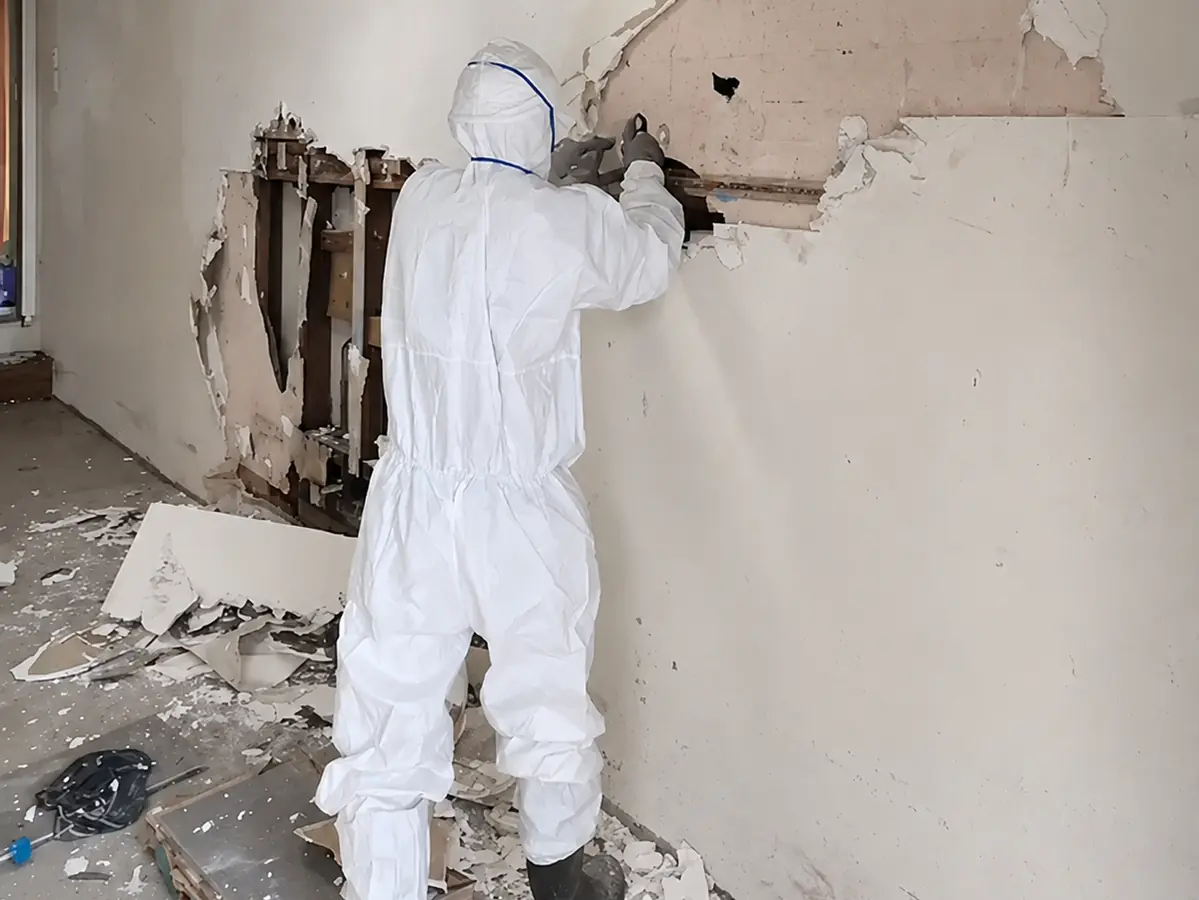
Before you start: finding out what you have
The cheapest point in any renovation to deal with this is before anything comes off a wall. If your home is from before about 1990, or has a bathroom, kitchen or extension from that era, it is worth establishing what the linings are before you have a schedule and a builder waiting.
- Age and renovation history established as part of quoting, not afterwards
- Suspect materials identified and flagged, with testing recommended rather than assumed away
- Testing arranged through a properly accredited laboratory
- A clear line drawn between what we can do and what needs a licensed removalist
- Authoritative information from SafeWork NSW and the NSW Government asbestos site rather than from us
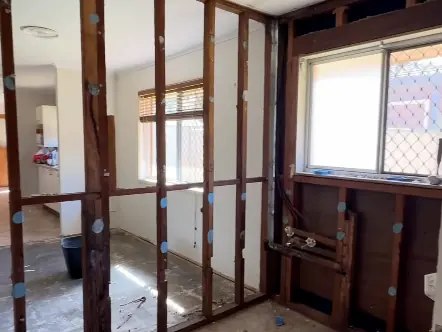
After the removalist: re-lining and finishing
This is the part that is genuinely our work, and it is what most people on this page will need next. Once a licensed removalist has taken the material away and the area has been cleared, the room needs lining, setting and finishing, and often new cornice as well.
- New plasterboard to walls and ceilings once the area has been cleared for re-entry
- Board selected for the joist and stud spacing actually found, which in an old house is rarely standard
- Wet area lining where a bathroom or laundry is being put back
- Cornice reinstated, and matched where the original profile allows it
- Coordinated with the removalist's programme rather than pushing against it
How asbestos gets disturbed, and what stops it
Almost nobody disturbs asbestos on purpose. It happens because somebody did not know it was there, or assumed a flat sheet on a wall was plasterboard. These are the situations that come up in Sydney homes most often, and the common thread is that all of them are avoidable by finding out first.
Mistaking fibro for plasterboard
People call every flat sheet on a wall gyprock. Asbestos cement sheet, known as fibro, is a completely different material and it was used for wall and ceiling lining across Sydney's post war suburbs. It does not look dramatically different once it is painted. Cutting, drilling or breaking it is the most common way asbestos gets released in a home renovation, and the person doing it usually has no idea.
Sanding a textured ceiling
Textured ceiling coatings from before the 1980s, the irregular sand like or sparkly finishes, are a recognised asbestos containing material. Sanding one back to modernise a room is close to the most effective possible way to put fibres into the air of a house somebody lives in. If your ceiling has that finish and your house is old enough, get it tested before anybody touches it, and do not let anybody talk you into just sanding it flat.
Finding it partway through a strip out
The expensive version. Lining comes off, something underneath is not what anybody expected, and the whole job stops while testing and licensed removal are arranged. On a renovation that has a schedule and a family living elsewhere, that is weeks. It is why we ask about the age and renovation history of a house before quoting rather than after starting.
Cornice in an inter war house
Less well known than fibro sheeting and just as relevant to this trade. Asbestos cement cornice is more likely in houses of the inter war period through to the mid 1940s, which is a great deal of Sydney's older middle ring. Somebody removing cornice to modernise a room, or making good after a ceiling repair, is working right at it.
A renovation that is newer than the house
Often the highest risk layer in an older home, and the least expected. A 1930s house with a bathroom or kitchen redone in the 1960s or 1970s has a newer layer that is still well inside the era. People reasonably assume the older parts are the risk. The tiled wall backing and the sheeting behind a mid century renovation is where it frequently is.
Damage from water, storm or a ceiling collapse
Asbestos cement in good condition and left alone is a very different proposition from the same material broken, weathered or soaked. Storm damage, a roof leak or a partial ceiling collapse in an older home can turn a stable material into a mess that needs assessing before anybody goes in and starts clearing up. That is the moment to stop rather than to start tidying.
Three things worth knowing before you renovate an older home
Nobody can tell by looking, including us
Asbestos cannot be reliably identified by sight. A tradesperson who glances at a ceiling from the floor and tells you it is probably fine is guessing with your health, and so is a stranger replying to a photograph in a Facebook group. Laboratory analysis of a sample is the only confirmation there is. On a house from before about 1990 we quote on the basis that suspect material should be tested, rather than on the basis that it is probably nothing.
The era is what tells you to check
Asbestos was banned nationally in Australia from the end of 2003, and homes built or renovated before the late 1980s are the population that matters. The working rule in this trade is that anything from before 1990 is treated as suspect until it has been tested. That covers most of Sydney's middle ring, and in the post war estates built to repeated plans it is often in the same place in every house in the street, which is at least predictable.
Our job here is to stop, and to hand you to the right people
We are not licensed to remove asbestos and we do not attempt it. If we find something suspect, work stops, we tell you what we have found and why we think it needs testing, and we point you to a licensed removalist and to the NSW authorities. NSW sets licensing thresholds that turn on whether the material is friable and how much of it there is, and SafeWork NSW publishes the current position. Then, once it is gone and the area has been cleared, we come back and re-line.
Frequently asked questions
How can I tell if my ceiling has asbestos?
You cannot, and neither can anyone else by looking. That is the whole answer and it is worth being blunt about, because the internet is full of people diagnosing ceilings from photographs. What the age of your house tells you is whether it needs testing, not whether it has asbestos. Anything built or renovated before about 1990 should be treated as suspect until a sample has been analysed by a laboratory. The NSW Government's asbestos website and SafeWork NSW are the places to start.
What are the signs of asbestos in a house?
There are indicators rather than signs. The era of the house and of any renovation in it. Flat sheeting on walls or ceilings in a post war home, which may be fibro rather than plasterboard. A textured or sparkly ceiling finish from before the 1980s. Asbestos cement cornice, which is more likely in inter war and early 1940s homes. Eaves, wet area sheeting and the backing behind old wall tiles. None of these confirms anything. They tell you it is worth finding out properly.
How common is asbestos in Sydney ceilings?
Common enough that the trade rule is to assume it until tested on anything from before 1990, which covers a very large share of Sydney's housing. It is not in every old ceiling, and plenty of homes of that age have fibrous plaster or plasterboard ceilings with none in them at all. The point is that the two look similar enough from a ladder that guessing is not a reasonable way to decide.
Would a house built in 1976 have asbestos?
It is squarely in the era where it might, so it should be tested before anything is disturbed. The same goes for a house built earlier and renovated in the 1960s or 1970s, where the newer work is often the higher risk layer rather than the original. Being in the era is not the same as having it, which is why the answer is always testing rather than assuming either way.
I think I have disturbed something. What should I do?
Stop, leave the area, and close the room off if you can. Do not sweep it, vacuum it or hose it down, because all three make it worse rather than better. Do not try to clean up the debris yourself. The NSW Government asbestos website and SafeWork NSW set out what to do next and who to contact, and they are the right authorities rather than us. If you are worried about your health, that is a conversation for your doctor, and we would not presume to answer it here.
Do you remove asbestos?
No. We are not licensed for it and we do not attempt it, including small amounts. Removal in NSW is licensed work, with the licence class depending on whether the material is friable and how much there is, and SafeWork NSW publishes the current requirements. What we do is tell you when something should be tested, stop if we find it, and put your walls and ceilings back afterwards.
What happens if you find asbestos partway through my job?
Work stops that day. We tell you what we have found, why we think it is suspect, and what testing involves, and we point you to a licensed removalist. We do not carry on around it, we do not seal it up and hope, and we will not be talked into finishing the room first. Once it has been removed and the area cleared, we come back and complete the plastering. It is disruptive and it is the only correct sequence.
Can you re-line the room after the removalist has finished?
Yes, and that is the part of this we are actually for. Once the area has been cleared for re-entry, the walls and ceilings need lining, setting and finishing, and usually new cornice. In an older house that means measuring the framing rather than assuming it, because the spacings are often not what current board is rated for. Send photographs and the room dimensions and we will price it.
If you already hold a clearance certificate and the room is empty, putting it back is ordinary renovation plastering, and that is work we take on.